
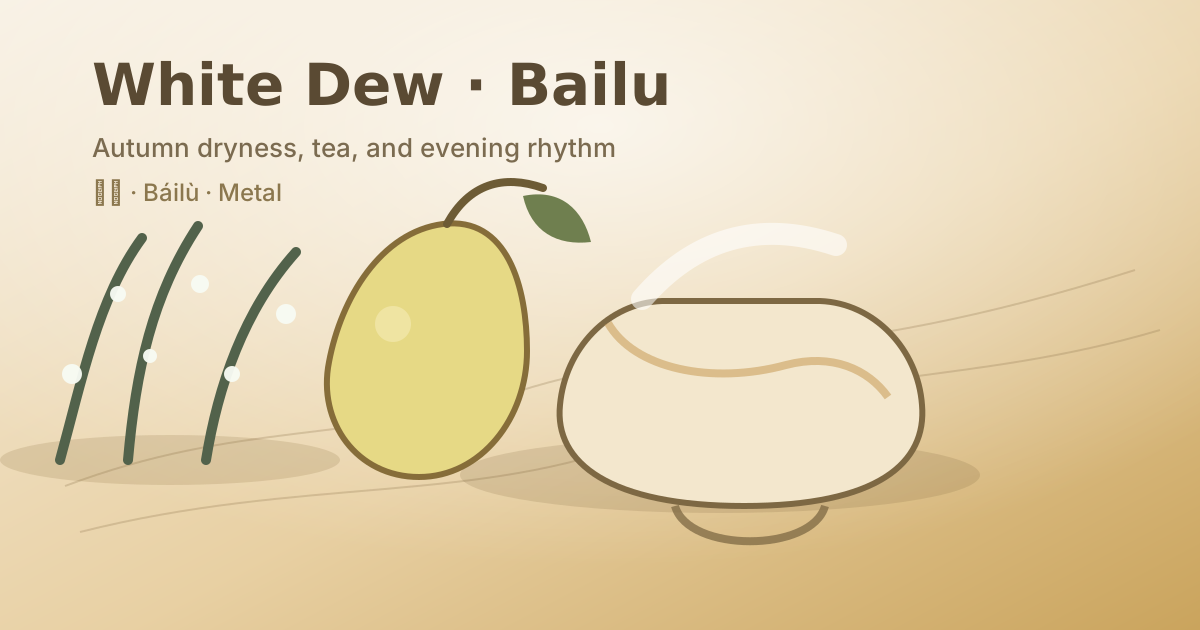
White Dew (Bailu): Autumn Dryness, Tea, and Evening Rhythm
White Dew (白露, Báilù) is the autumn term when morning moisture becomes visible and evening air begins to feel cooler. Here is a plain-English guide to the cultural reading of Bailu: autumn dryness, gentle tea, pear, lung-season awareness, and a softer rhythm after sunset.
What White Dew is in the Chinese calendar
The Chinese seasonal calendar divides the year into 24 solar terms (节气, jiéqì), each roughly two weeks long. White Dew (白露, Báilù) is the fifteenth term of the year and the third term of autumn. It usually begins around September 7 or 8, after End of Heat (处暑, Chǔshǔ) and before the Autumn Equinox (秋分, Qiūfēn). The name is literal and poetic at the same time: white dew is the pale moisture that appears on grass, leaves, and railings after cooler nights.
Bailu does not mean the weather has fully cooled. Many places still have warm afternoons, late-summer humidity, and bright sun. What changes is the night. The evening cools faster, morning grass looks wet, and the body may start noticing dry skin, a dry throat, or a stronger wish for quiet after dinner. In the cultural reading, this is autumn becoming visible at the surface. For broader external background, see the Wikipedia overview of solar terms and the Wikipedia overview of the Chinese calendar.
- White Dew is the third autumn solar term, not the middle of autumn.
- Its image is cool morning moisture after warm days.
- The season belongs to the Metal phase, which is linked with lungs, skin, clarity, and letting go.
- For modern life, it is a useful moment to soften evenings and add gentle moisture.
Why dew matters in the seasonal reading
Dew forms when warm, moist air meets a cooler surface and condenses into tiny drops. Traditional Chinese seasonal writing turns that physical image into a body-and-rhythm metaphor. The world is not dry in an absolute sense; moisture is moving, collecting, and becoming visible. At Bailu, the outside world shows moisture on the ground while the inside body may start asking for moisture in a gentler form: warm soup, cooked pear, room-temperature water, soft tea, and a less abrupt evening.
This is cultural and educational, not medical advice. The practical translation is simple: the season is no longer asking for only summer cooling. It is asking for autumn moisture and a calmer night rhythm. A Western reader might recognize the same shift as the first week when a bedroom window feels cool before dawn, a linen shirt is not enough after dinner, and the skin wants a little more care.
Metal element, lungs, and autumn dryness
In the Five Elements frame, autumn belongs to Metal (金, jīn). Metal is associated with the lungs and large intestine, with the skin as an outer surface, with the color white, with pungent flavor, and with the emotion of grief or letting go. These are cultural associations, not clinical claims. SeasonQi uses them as a plain-language way to describe why autumn writing often emphasizes breath, dryness, clear air, pear, radish, ginger, and a more reflective mood.
White Dew sits early in that Metal arc. The Start of Autumn term plants the seed of autumn. End of Heat says summer heat is beginning to leave. White Dew makes the change visible on the ground and in the morning air. If you have read our Lung Qi and Metal Element article, Bailu is the term-level version of the same seasonal message: protect the evening, moisten gently, and make space for a little clean quiet.
The cultural reading of dryness is not a diagnosis. A dry throat after waking, a slight change in skin, or a stronger wish for warm drinks may simply be ordinary seasonal noticing. If dryness feels sharp, persistent, or concerning, please consult a qualified clinician. SeasonQi's frame is cultural guidance, not medical advice.
The Bailu food shift: moistening without heaviness
Food around White Dew is often described as autumn-moistening. That does not mean heavy, oily, or sweet food. It means gentle moisture that the body can receive without feeling weighed down. The most repeated symbols are pear, white fungus, lotus root, lily bulb, sesame, honey, warm soups, rice porridge, daikon, and lightly cooked greens. These ingredients are cultural flags for the season, not magic foods.
- Pear, cooked or room temperature. Pear is the classic autumn fruit in Chinese seasonal writing. A steamed or gently warmed pear feels more in tune with Bailu than an iced fruit bowl.
- Lotus root and lily bulb. Both are pale, moistening seasonal symbols used in soups and simple dishes.
- Sesame, nuts, and soft grains. Small amounts of black sesame, walnuts, rice, millet, or oats bring a soft, grounding tone after summer's lightness.
- White radish and ginger. Daikon and ginger bring a pungent note that fits the Metal season without making the meal too heavy.
- Warm soup or congee. A soft bowl in the evening is often the easiest modern translation of the White Dew food mood.
For a year-round food map, the seasonal eating guide gives the larger pattern. Bailu is one small turn inside that map: less iced summer food, more warm moisture, still light enough for early autumn.
Tea for White Dew season
Tea is one of the simplest Bailu anchors because it sits between food and ritual. The season does not need a complicated formula. A warm cup, held in the evening, is already the point. Traditional and modern seasonal writing often mentions light oolong, roasted barley tea, chrysanthemum, pear water, jujube in a mild infusion, or simply warm water with a calm pace. The choice matters less than the rhythm: warm, unhurried, not too late, not iced.
For a Western reader, the closest translation is the first autumn cup you actually look forward to after dinner. It might be a mild oolong, a caffeine-free barley tea, a flower tea you already tolerate, or a simple cup of warm water. If caffeine affects your sleep, choose a caffeine-free option in the evening. If you are pregnant, take medication, or have a health concern, please consult a qualified clinician before using herbs in a therapeutic way. As a cultural ritual, a warm cup is enough.
SeasonQi's Chinese tea ritual guide gives more context on preparing tea as a quiet practice rather than a performance. Bailu is a good time to keep the ritual small: rinse a cup, pour slowly, sit near a window, and let the cooling light be part of the practice.
Five quiet anchors for White Dew
You do not need to redesign your week around White Dew. Pick one or two quiet anchors and keep them small enough to repeat. The season is asking for a softer edge, not a new identity.
- Notice the morning dew. Step outside or look out a window before the day heats up. The quiet anchor is simply seeing the season before checking a screen.
- Move one drink from iced to warm. Choose one daily drink that was cold in summer and make it warm or room temperature for the Bailu window.
- Add one pear or soup moment. A cooked pear, a bowl of soup, or a soft congee can become the food symbol for early autumn moisture.
- Dim the evening earlier. Turn one lamp lower after dinner. Bailu belongs to the part of the year when the evening starts arriving sooner.
- Write one sentence of release. Metal season is about letting go. Write one sentence beginning with, "This autumn I can release..." and do not turn it into a plan.
If you only choose one, make it the warm evening drink. It brings tea, rhythm, moisture, and sunset into one small action.
A sample Bailu day for modern life
- Morning: notice the cooler air before the phone. If grass, leaves, or a railing hold dew, let that be the day's seasonal sign.
- Breakfast: warm oats, rice porridge, toast, or eggs with a pear, a few sesame seeds, or a small side of cooked greens.
- Midday: keep lunch steady and not too heavy. Early autumn still carries warmth, so the cultural habit is moistening without heaviness.
- Afternoon: choose tea or warm water instead of another iced drink. Let the shift be modest.
- Evening: prepare a simple soup, warm pear, or light grain bowl. Dim one light, step outside briefly, and notice how quickly the air changes after sunset.
This kind of day is not a checklist. It is a way of letting the season touch ordinary habits: food, drink, light, breath, and bedtime.
Evening rhythm: the real practice of Bailu
The strongest White Dew practice may be the evening, not the food. After midsummer, many schedules keep moving as if the light were still long. Bailu says the evening is changing. It asks for a softer landing: less late heat, less bright light, less overstimulation, more warm tea, more quiet, more willingness to end the day before the body is exhausted.
That does not require a formal ritual. A simple sequence is enough: finish dinner a little earlier, make a warm drink, lower the light, prepare clothes or a bag for tomorrow, and sit quietly for a few breaths before the next screen. The cultural reading is that Metal season values clean edges and clear endings. A clear ending to the day is one way to practice that value.
If you notice sadness, grief, anxiety, or low mood lasting more than two weeks, please reach out to a qualified mental health clinician. Autumn's reflective tone can be meaningful, but SeasonQi never frames emotional distress as something to handle alone through seasonal ritual.
How Bailu connects to the rest of the autumn terms
White Dew is the point where autumn becomes visible but not yet balanced. Start of Autumn (立秋, Lìqiū) opens the door. End of Heat (处暑, Chǔshǔ) says summer heat is leaving. White Dew (白露, Báilù) shows the coolness on the ground. The Autumn Equinox (秋分, Qiūfēn) brings balance, Cold Dew deepens the chill, and Frost's Descent closes the autumn arc.
This is why Bailu is a bridge article between our Start of Autumn guide and the Autumn Equinox guide. It also belongs naturally with the Yin Yang vs Five Elements comparison, because Bailu is both a Yin-Yang shift — nights cooler, Yin rising — and a Metal-phase moment in the Five Elements cycle.
For the full sequence, read the complete 24 solar terms guide. It places Bailu in the whole year, not just in autumn.
What this article is not
It is not a treatment for any medical condition. It is not a clinical protocol, a prescription, or a substitute for a qualified healthcare professional. White Dew, autumn dryness, lung-season language, and Metal element language used here are cultural and educational, drawn from the Chinese seasonal wellness tradition. If you have asthma, a lung condition, a skin condition, an eating disorder, are pregnant, take medication, or have any other health concern, please consult a qualified clinician before changing food, tea, movement, or sleep patterns around White Dew — or on any other day.
SeasonQi ritual prompt
On one White Dew evening, make a warm drink before the sky is fully dark. Sit where you can see a window or a small lamp. Ask, "What is the season asking me to soften?" Let the answer be one sentence, not a project. This is cultural guidance, not medical advice, and what you do with it is up to you.
Safety and scope
This article is for educational and cultural purposes only. It is not medical advice, diagnosis, or treatment. It is not a substitute for a qualified healthcare professional. If you have a known health condition, are pregnant, take medication, or have any other concern, please consult a licensed clinician before changing food, movement, tea, or sleep patterns.
FAQ
What is White Dew (Bailu) in the 24 solar terms?
White Dew (白露, Báilù) is the fifteenth solar term and the third autumn term. It usually begins around September 7 or 8, when cooler nights make dew visible on grass and leaves.
Why is Bailu connected with dryness?
Bailu sits when nights cool but days can still be warm. The cultural reading is that the lungs, skin, and evening rhythm ask for gentle moisture and less late-summer heat.
What tea fits White Dew season?
A gentle warm tea such as light oolong, roasted barley tea, chrysanthemum, or a simple warm pear-style drink can fit the season. Use tea as a cultural ritual, not a treatment.
Is White Dew the same as the Autumn Equinox?
No. White Dew begins around September 7 or 8. The Autumn Equinox comes around September 22 or 23 and marks the middle balance of the autumn season.
How can Western readers use Bailu gently?
Use Bailu as a quiet reminder to soften evenings, choose warm tea, notice dry air, eat cooked pear or soup when it suits you, and step outside in the cooler morning. It is cultural guidance, not medical advice.