
Start of Autumn (Liqiu): A Gentle Wellness Guide for the First Autumn Term
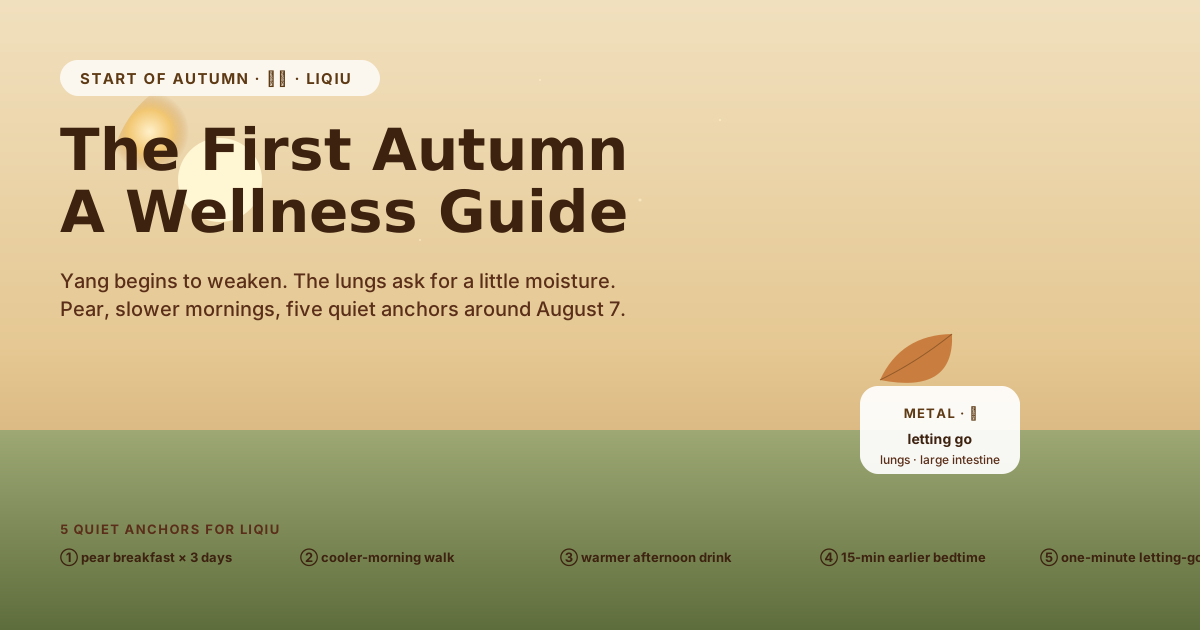
Start of Autumn marks the moment Yang begins to weaken and Yin begins to grow, even though the air is still warm. Here is a plain-English walk-through of Liqiu: the cultural reading, the small body signs to notice, the food shifts to try, and five quiet anchors for the first autumn week.
What Liqiu (Start of Autumn) actually is
Start of Autumn (立秋, Lìqiū) is the thirteenth solar term of the year and the first of the six autumn terms. In the modern calendar it falls around August 7, though the exact day shifts a little each year. The Chinese character 立 means "to stand" or "to begin," and 秋 means "autumn," so the term literally reads as "the standing-up of autumn" or "the beginning of autumn." It is the seasonal moment when the year, for cultural purposes, tips from summer to autumn. For an external reference, the Wikipedia overview of Liqiu walks through the historical and linguistic layers.
The interesting thing about Liqiu is that the calendar says "autumn" while the weather still says "late summer." In much of the Northern Hemisphere, August 7 sits inside another stretch of warm days. The cultural reading is that Liqiu is a seed planted in late summer — a moment to begin autumn habits even when the season has not fully arrived. For the deeper cultural background, the complete 24-term guide on this site maps Liqiu against the other five autumn terms.
Why the season turns at Liqiu, even when the weather does not
The classical reading is that Liqiu is when Yang (the warm, the active, the outward) begins to weaken and Yin (the cool, the inward, the resting) begins to grow. Yin-Yang do not switch overnight — they move in waves — so even though the warmest weeks of the year are usually in mid-July, by August 7 the cultural position is that Yang has passed its peak and the long, slow turn back is underway. You can read the same idea in the Yin and Yang balance guide: the two are paired, never fully one or the other, always trading places.
This is also why Liqiu is the first autumn habit-anchor, not the last summer habit-anchor. The cultural calendar is forward-looking in the same way that a gardener starts fall planting in midsummer. Liqiu is the moment to begin autumn habits — earlier than feels natural — so the body has time to ease in.
The element shift: from Earth late-summer to Metal autumn
In the Five Elements cycle, midsummer and late summer belong to the Earth phase. The Earth phase asks for steadiness, slow-cooked grains, regular meals, and a grounded pace. Late summer is the short bridge between summer (Fire) and autumn (Metal), and Liqiu is the moment you step onto the bridge. The Five Elements explained guide has the broader season map; this article focuses on the Liqiu shift.
Around Liqiu, the cultural element shifts from Earth to Metal (金, jīn). The associated organs are the lungs and large intestine. The associated emotion is grief, read not as something to suppress but as something to honor — a small grief of letting go, a quiet letting-go of summer. The cultural color is white (think of a white pear, a white radish, the white edge of morning dew). The cultural flavor is pungent — the gentle bite of scallion, ginger, or a few slices of daikon.
- The associated organs: lungs and large intestine.
- The associated emotion: grief or letting-go.
- The cultural color: white.
- The cultural flavor: pungent.
- The cultural question: what can be released?
Five body signs that autumn is near
Around Liqiu, the body often starts to notice the season change before the calendar does. Five small signs the cultural tradition pays attention to:
- A morning throat: the first time your throat feels a little dry on waking, even though the day warms up. A small sign the lungs are asking for moisture.
- Bowels shift: digestion can become either slightly looser or slightly less regular as the digestive rhythm eases out of late summer. Nothing dramatic, just a small shift.
- A heavier sleep: some people sleep longer, some people sleep lighter. Both can happen — the body's clock is asking the nervous system to recalibrate.
- Skin a little drier: the back of the hands, the outer cheeks. The skin is a quiet surface for noticing moisture levels.
- A small nostalgia: nothing heavy. A brief sentimental pull toward summer, past summers, or a slower pace. The cultural reading is that letting-go begins gently before the season has fully turned.
None of these is a medical signal. They are gentle body cues that match the cultural reading of the season. If any of them feels sharp or concerning, it is worth talking to a clinician; the cultural reading is the gentle layer, not the diagnostic layer.
The Liqiu food shifts
Food around Liqiu is described in the tradition as a slow hand-off from summer-cool to autumn-moisten. The cultural habit is to make three small shifts, not one big switch. The seasonal eating article on this site walks through the year-round map; the Liqiu-specific moves are below.
- Ease the icy drinks. Late summer calls for cold water, cold brew, chilled fruit. By Liqiu, a few of those can return to room temperature or slightly warm. The body is starting to ask for less cold.
- Add a small piece of duck or a slightly larger grain portion. The folk saying 贴秋膘 (tiē qiū biāo) — "put on a little autumn fat" — captures the cultural reading that the body is asking for slightly more substantial food after the lightness of midsummer. A small portion of slow-cooked meat (duck is the classical choice), a slightly larger portion of warm millet or rice, a few slices of pear.
- Add a few autumn-moosening ingredients. Pear (生津, generates fluids), lotus root, white radish (daikon), a small amount of honey in warm water, lily bulb, a few slices of steamed yam. None of these is a "magic" ingredient; they are the cultural flags for autumn moisture.
- Keep the gut pace steady. Eat at regular times. The lungs and large intestine pair is a cultural phrase for "let the system run regularly." A calm eating pace is one of the bigger levers.
Five quiet anchors for the first autumn week
You do not need to do all five. Pick one or two and keep them simple enough to repeat. The point is to give the season a small entry ritual.
- ① A pear breakfast, three mornings in a row. A small bowl of ripe pear, eaten slowly. Cultural: pears are read as the first autumn fruit and as supporting the lungs. Practical: the recipe is one pear, one slow breakfast.
- ② A cooler-morning walk. The temperature drop between July and August mornings is sharper than people notice. A short walk in the cooler morning air, three days in a row, is a quiet lung-and-skin kindness.
- ③ One warming drink an hour after lunch. A small cup of warm water, ginger tea, or warm barley tea — replacing the iced drink that was the lunch habit in July. The cultural reading is that the digestive system is starting to shift.
- ④ A 15-minute earlier bedtime. The classical phrase is "收早睡" — collect oneself and sleep a bit earlier. Even 15 minutes earlier, five nights in a row, is read as a small seasonal kindness.
- ⑤ A short evening reflection: what summer is releasing, what autumn is asking for. One minute, by candlelight if you have it, in plain sight if you do not. The cultural reading is that letting-go is a small practice, not a big event.
Practical order if you are trying this for the first time: pick ① plus ③ or ④. Do them for five to seven days, then layer in another anchor the next week. The season is a slow hand-off, not a checklist.
Common beginner questions about Start of Autumn
Is Liqiu actually cooler? Often no, especially in the early part of the Liqiu window. The cultural reading is that the seed of autumn has been planted even though the summer weather may continue for weeks. This is exactly the moment the Liqiu habit-anchor matters most — you are not waiting for the weather to change, you are starting the rhythm in advance.
Do I need to give up summer foods? No. The cultural habit is to gently reduce them, not eliminate them. A few less iced drinks, a few more warming grains, a few pear slices — the rest of summer's lighter habits can stay through the warm weeks of August. There is no need to fast, diet, or punish the late-summer body.
Does the Lung Qi and Metal Element article on this site fit here? Yes — the Lung Qi and Metal Element guide is the deeper seasonal companion to this one, covering the whole autumn arc. This article is the term-level introduction; the Lung Qi piece is the season-level practitioner guide. Read in either order.
Is there a dietary supplement or herb I should start? The cultural writing around Liqiu is food-first and habit-first, not supplement-first. If you have a known health condition, are pregnant, take medication, or have any other concern, please consult a qualified clinician before starting any new supplement or herb.
How Liqiu fits into the rest of the autumn terms
Liqiu is the seed of the autumn arc. The five autumn terms that follow each carry a slightly different pivot.
- Liqiu (立秋, August 7): the seasonal hand-off, food shifts from cooling to moistening.
- Chushu (处暑, August 23): "the heat is leaving" — the cultural moment when summer-heat finally releases its grip.
- Bailu (白露, September 7): "white dew" — visible moisture on grass in the morning, the lungs-asking-for-moisture sign.
- Qiufen (秋分, September 22): the autumn equinox — the year balances again, like the Spring Equinox.
- Hanlu (寒露, October 8): "cold dew" — moisture turns cool, the first real autumn chill.
- Frost's Descent (霜降, October 23): the first frost, and the hand-off to winter.
Liqiu is the smallest seed of the autumn arc. Most of the bigger shifts in food and rest happen at Bailu and Hanlu. The work of Liqiu is simply to plant the seed.
When Liqiu falls on a year with a longer summer
Some years, late August still feels like midsummer. The cultural habit at Liqiu is to begin anyway — the seed is the shift in habit, not the arrival of cool weather. The cultural reading is that the autumn habit you plant in early August is what you will be eating, sleeping, and breathing like when the air finally cools in late September. If you wait for the weather to change first, the season has already passed you.
The practical move in a long-summer year is to make the first Liqiu anchor the smallest one. The pear breakfast. The warmer afternoon drink. The 15-minute earlier bedtime. One anchor, kept for a week, then layer. The seed does not need to be planted all at once.
What this article is not
It is not a treatment for any medical condition. It is not a clinical protocol, a prescription, or a substitute for a qualified healthcare professional. Start of Autumn (Liqiu) is a cultural season-marker drawn from the Chinese seasonal wellness tradition, and the food, rest, and movement habits around it are cultural and educational. If you have a known health condition, are pregnant, take medication, or have any other concern, please consult a qualified clinician before changing food, exercise, or sleep patterns in the name of the season — or on any other day.
SeasonQi ritual prompt
Around August 7, choose one small anchor — a pear breakfast, a cooler-morning walk, a warmer afternoon drink, an earlier bedtime, or a one-minute evening reflection on what you are releasing. Repeat it for five to seven days. You are not waiting for the season to change; you are planting the seed of the season.
Safety and scope
This article is for educational and cultural purposes only. It is not medical advice, diagnosis, or treatment. It is not a substitute for a qualified healthcare professional. If you have a known health condition, are pregnant, take medication, or have any other concern, please consult a licensed clinician before changing food, movement, or sleep patterns.