
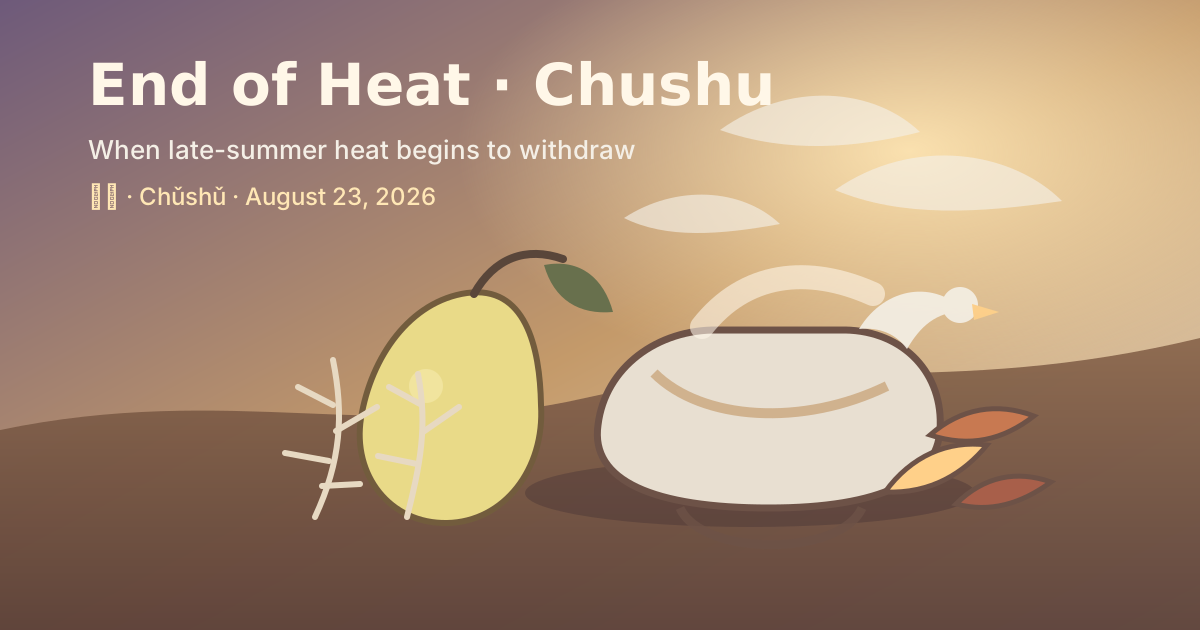
End of Heat (Chushu 处暑): Meaning, 2026 Date, Traditions and Seasonal Rhythm
Chushu arrives when late August still feels like summer, yet mornings, clouds, appetite, and evening light begin to suggest another season. Here is a plain-English guide to the fourteenth solar term: what “End of Heat” really means, when it falls in 2026, how it sits between Liqiu and Bailu, and five gentle ways to notice the transition without turning a cultural calendar into a medical rulebook.
What Chushu means
Chushu is written 处暑 in simplified Chinese and 處暑 in traditional Chinese. The pinyin is Chǔshǔ. The character 暑 refers to summer heat. In this phrase, 处 is commonly understood as the heat reaching a stopping point or beginning to withdraw, which is why English translations include “End of Heat,” “Limit of Heat,” and “Heat Ends.” All three point to a transition rather than a sudden switch.
Chushu is the fourteenth of the Twenty-Four Solar Terms. The UNESCO description of the Twenty-Four Solar Terms explains that the system divides the sun’s annual circular motion into twenty-four segments. It developed through observations of seasons, astronomy, and other natural phenomena in the Yellow River region, then spread nationwide as a guide for production and daily routines. UNESCO inscribed this knowledge and its associated practices on the Representative List of the Intangible Cultural Heritage of Humanity in 2016.
This solar basis matters. The solar terms are used alongside the traditional Chinese lunisolar calendar, but they are anchored to the sun’s annual motion. Chushu is therefore a recurring astronomical-seasonal marker, not simply a numbered day in a lunar month.
When is Chushu in 2026?
In 2026, Chushu falls on August 23. The term usually begins around August 22 or 23, when the sun reaches 150 degrees of ecliptic longitude. The exact civil date can shift slightly by year and time zone, which is why a general guide may say “around August 23” while a year-specific calendar gives one date.
On the seasonal sequence, Chushu comes after Start of Autumn (Liqiu) and before White Dew (Bailu). That placement gives the term its character. Liqiu says autumn has begun in the calendar, even when the afternoon is still hot. Chushu says the peak heat is beginning to retreat. Bailu gives that cooling trend a visible image: pale dew on grass during cooler mornings.
If the sequence is new to you, the complete guide to the Twenty-Four Solar Terms maps all twenty-four “mini-seasons” across the year. Chushu makes the most sense when seen as one step in that larger rhythm.
Why “End of Heat” can still feel hot
The most useful correction for beginners is simple: End of Heat does not mean every hot day ends on August 23. China spans many climates, and SeasonQi readers live across an even wider range of latitudes and weather patterns. Heat and humidity may linger. In some years, the afternoon can feel almost unchanged while only the dawn, sunset, or night air carries a hint of the next season.
An official China government overview of End of Heat places Chushu within the continuing story of the solar calendar. The practical reading is not “summer is over everywhere.” It is “the period of peak heat is beginning to loosen.” That makes Chushu a threshold, not a thermostat.
For a Western comparison, think of the first late-August evening when you notice darkness arriving earlier, even though the next afternoon may still be hot. The calendar has moved before the weather has fully committed. Chushu gives that half-changed feeling a name.
The seasonal feeling: late summer meeting early autumn
Chushu belongs to a mixed landscape. Summer has not disappeared, but autumn is no longer theoretical. The traditional imagery often gathers around four observations:
- Heat begins to recede unevenly. The day may stay warm while mornings and nights become easier to distinguish from midsummer.
- The sky starts to look different. Late-summer clouds can appear higher, more sculpted, and more noticeable against a clearer early-autumn blue.
- Harvest attention grows. The solar terms historically helped communities organize agricultural work, and Chushu sits near an active period of ripening, gathering, and preparing.
- Rest becomes more appealing. Chinese seasonal writing sometimes calls the heavy, sleepy feeling after summer heat “autumn weariness.” It is a cultural phrase, not a diagnosis.
The last point deserves care. Feeling tired can have many ordinary or medical causes. The Chushu frame simply notices that a long hot season can be demanding and that a calmer schedule may feel welcome. Persistent or unusual fatigue belongs in a conversation with a qualified healthcare professional, not in a self-diagnosis based on a solar term.
Chushu traditions: duck, clouds, harvest, and water
There is no single Chushu celebration practiced identically across China. Customs vary by province, city, climate, household, and historical period. Still, several traditions appear often in Chinese cultural sources.
1. Eating duck
Duck is the best-known food associated with Chushu. A Shanghai government cultural overview describes eating duck as a continuing End of Heat tradition and lists preparations including roast duck, smoked duck, and duck cooked with ginger shoots. In traditional Chinese food classification, duck is often described as cool-natured. That is a cultural category, not a statement about the food’s serving temperature or a clinical effect.
2. Watching the changing clouds
Chushu writing often invites people to “enjoy the clouds.” This is less a formal ritual than a practice of attention. As the most oppressive heat loosens, the sky itself becomes part of early-autumn leisure: a reason to walk, look up, and recognize that the year is turning.
3. Fishing-season festivals in coastal regions
Along parts of China’s eastern coast, the late-August period may coincide with the reopening of fishing activity after seasonal bans. Cultural accounts connect Chushu with fishing-season festivals in places such as Zhejiang and nearby coastal provinces. This is a regional maritime custom, not a universal Chushu requirement.
4. Water lanterns and nearby observances
Depending on the year, Chushu may fall near the Zhongyuan Festival period. Some communities float lotus-shaped water lanterns to remember the dead and bless the living. The solar term and the festival are separate calendar traditions, but their timing can overlap, which is why they appear together in some cultural descriptions.
What people traditionally eat during Chushu
A Chushu table is better understood as a transition table than a fixed menu. It can hold the freshness of late summer and the gentler warmth of early autumn at the same time. Foods often mentioned in seasonal writing include duck, pear, lotus root, rice porridge, cooked vegetables, soup, and tea.
- Duck: the signature Chushu custom, prepared differently across regions. A modest serving can be part of a normal meal; it does not need a wellness claim attached to it.
- Pear: an early-autumn symbol that also appears in the SeasonQi guides to Liqiu and Bailu. Enjoy it fresh, poached, or sliced into porridge according to preference.
- Lotus root: crisp when lightly cooked and substantial enough to signal the move toward autumn dishes.
- Rice or millet porridge: a simple breakfast or evening meal when appetite feels caught between humid summer and cooler mornings.
- Warm or room-temperature tea: a gentle alternative when the habit of drinking everything over ice no longer feels necessary.
There is no need to force a seasonal food if it does not suit your body, climate, budget, beliefs, allergies, or diet. If you are pregnant, take medication, manage a chronic condition, or are considering concentrated herbs or supplements, consult a qualified clinician. A cultural food calendar is not a prescription.
How Chushu differs from Liqiu and Bailu
These three consecutive terms can sound repetitive in English, so it helps to give each one a distinct job:
- Liqiu — Start of Autumn, around August 7: the calendar opens the autumn chapter. The shift is announced before the weather fully changes.
- Chushu — End of Heat, around August 23: peak heat begins to withdraw. Summer and autumn remain visibly mixed.
- Bailu — White Dew, around September 7: cooler nights and morning moisture become the dominant image. Autumn dryness and evening rhythm move into clearer focus.
In SeasonQi terms, Liqiu is the seed, Chushu is the hinge, and Bailu is the first visible proof. Reading the three guides together creates a six-week story rather than three isolated dates.
Five gentle Chushu anchors for Western readers
You do not need to reproduce a historical Chinese household or follow every traditional association. Choose one small action that helps you notice the late-August threshold where you live.
1. Take a short cloud walk
Walk for ten or fifteen minutes in the early evening and look at the sky before looking at your phone. Notice whether the light, cloud edges, temperature, or length of shadow feels different from a month ago. The purpose is seasonal attention, not exercise performance.
2. Move one drink away from ice
Choose one daily drink and have it at room temperature or gently warm. This is not a rule against cold beverages. It is a small way to test whether your preferences are already shifting with the season.
3. Cook one transition meal
Build a simple plate that includes a late-summer vegetable and an early-autumn ingredient: tomato with cooked rice, zucchini with lotus root, duck or tofu with pear on the side, or porridge with a few seasonal additions. The SeasonQi seasonal eating map offers a broader cultural framework.
4. Give the evening a clearer edge
Dim one light, close one screen, or begin your wind-down fifteen minutes earlier. The existing late-summer sleep guide focuses on quiet routines without promising a result. Chushu is a useful calendar prompt for trying one of them consistently.
5. Write one line about what is ending
Finish the sentence: “The heat I am ready to release is…” You can answer literally, emotionally, or not at all. In the Five Elements language used by SeasonQi, autumn and the Metal phase often carry the image of letting go. The Lung Qi and Metal Element guide explores that symbolism in more detail.
A simple Chushu evening ritual
If you prefer one complete ritual instead of five separate ideas, try this twenty-minute version:
- Step outside or open a window for three minutes and notice the temperature and sky.
- Prepare warm tea or room-temperature water.
- Eat a simple seasonal snack, such as pear, if it suits you.
- Turn off one bright light and sit quietly for five slow breaths.
- Write one line about what summer gave you and one line about what autumn may ask from you.
The ritual is intentionally ordinary. Chushu does not need a purchase, a supplement, or a dramatic cleanse. Its strength is the small recognition that a season can change before it becomes obvious.
Common Chushu questions
What does Chushu mean?
Chushu means End of Heat, Heat Ends, or Limit of Heat. It describes peak summer heat beginning to withdraw, not an instant end to every hot day.
When is Chushu in 2026?
Chushu falls on August 23 in 2026. The precise starting moment varies by astronomical calculation and time zone, but August 23 is the practical civil-calendar date for the term.
Is Chushu the end of summer?
It is a late-summer-to-early-autumn threshold in the Chinese solar calendar. Meteorological seasons and local weather do not always match the cultural date, so it may still feel hot where you live.
Why is duck associated with Chushu?
Eating duck is a widely cited Chushu custom. Traditional Chinese food culture often classifies duck as cool-natured, and different regions have developed their own late-summer preparations. This is a cultural food association, not a clinical recommendation.
How is Chushu different from White Dew?
Chushu emphasizes heat beginning to retreat. White Dew, roughly two weeks later, emphasizes cooler nights and visible morning dew. Chushu is the hinge; Bailu is the clearer autumn image.
What this article is not
This article is not a treatment for fatigue, insomnia, digestive symptoms, anxiety, or any other medical condition. It is not a clinical protocol, diagnosis, prescription, or substitute for a qualified healthcare professional. Chushu is a cultural season-marker. Its foods and rituals are presented as ways to learn about Chinese seasonal traditions and to reflect on changes in weather and daily rhythm.
If you are pregnant, take medication, live with a chronic condition, have food allergies, or experience persistent fatigue, sleep problems, chest pain, shortness of breath, or other concerning symptoms, consult a licensed clinician. Do not delay care because a symptom seems to match a seasonal story.
SeasonQi ritual prompt
On or around August 23, step outside near sunset with a warm drink. Find one sign that summer heat is loosening and one sign that it remains. Let both be true. Chushu is the season of the hinge, not the season of a perfect switch.
Safety and scope
This article is for educational and cultural purposes only. It is not medical advice, diagnosis, prevention, or treatment, and it is not a substitute for a qualified healthcare professional. Food and rest traditions vary by region and household. Choose ordinary foods and gentle routines that fit your needs, and seek professional guidance for medical concerns, persistent symptoms, pregnancy, medication questions, or major dietary changes.