
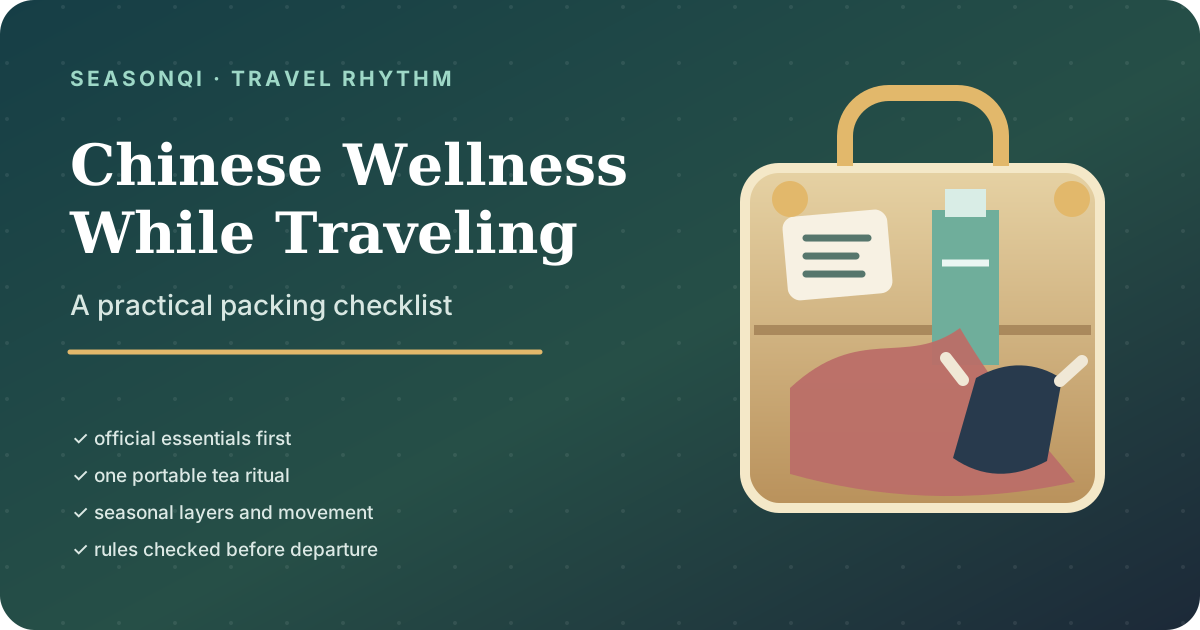
Chinese Wellness While Traveling: A Practical Packing Checklist
Travel changes your light, meals, movement, sleep and sense of time. This packing list begins with official travel-health essentials, then adds small Chinese wellness-inspired comforts that make a changing environment easier to meet.
The packing philosophy: safety first, ritual second
A useful travel bag has two layers. The first is practical and official: identification, insurance information, permitted medicines, copies of important documents, destination-specific supplies and anything you rely on every day. The second is personal: a few objects that help an unfamiliar room feel more legible. Chinese seasonal culture offers a simple vocabulary for that second layer—notice the weather, preserve a gentle rhythm, balance activity with rest and carry one repeatable ritual.
This approach does not require an elaborate kit. In fact, the best ritual objects are small enough to use. A flask can hold warm water or tea. A scarf can become a light layer on an over-air-conditioned train. A notebook can hold one line about sleep, weather and energy without turning travel into constant self-monitoring. Comfortable shoes make it easier to choose a short walk. The point is not to recreate home inside a suitcase. It is to keep a few familiar anchors while the setting changes.
What this article is not
This article is not a medical travel-kit prescription, a TCM diagnosis, a supplement list or a source of disease-prevention claims about tea, qigong or seasonal habits. It does not replace vaccines, prescribed medicine, travel insurance, destination-specific public-health guidance or advice from a qualified healthcare professional. It also does not confirm that a medicine, herb, tea, food or plant product is legal to carry across a particular border.
If you live with a health condition, are pregnant, use prescription medicine, need mobility support or will visit a destination with specific health risks, consult a qualified healthcare professional or travel clinic. Check the laws of your destination and every transit country. This is cultural guidance, not a medical prescription.
Start with the official travel-health foundation
The CDC Pack Smart guidance recommends preparing a travel health kit around the destination and the items that may be difficult to find during the trip. That practical foundation belongs ahead of every wellness extra.
- Identity and access: passport, visa where required, emergency contacts, insurance information and copies of critical documents in an accessible format.
- Medicines: your regular medicines, a clear medication list and supporting documents appropriate to your route. The CDC advises checking destination and transit-country rules because a medicine that is ordinary at home may be restricted elsewhere.
- Personal supplies: the everyday health, accessibility or hygiene items you would not want to search for after arrival.
- Destination-specific protection: supplies chosen from official destination guidance rather than from a generic social-media checklist.
- A carry-on backup: essential items that should stay with you if checked luggage is delayed.
The CDC guidance on traveling with medicine also recommends checking embassy rules, carrying enough for the trip and packing medicine in carry-on baggage. Keep the cultural comfort kit separate from this official foundation so that a favorite tea never displaces something essential.
Your Chinese wellness-inspired comfort kit
Once the foundation is covered, choose a few objects that support routine rather than making health claims. The following list fits the SeasonQi idea of a “quiet anchor”: something visible, simple and repeatable.
- An empty insulated flask: useful for water or tea after security, depending on local facilities and rules.
- Commercially labeled tea: choose sealed, clearly identified products and check agricultural import rules before crossing borders.
- A light scarf or wrap: an adaptable layer for changing weather and indoor temperatures.
- Eye mask and earplugs: practical tools for an unfamiliar room, without claiming to solve a sleep condition.
- Comfortable socks and walking shoes: small encouragements toward ordinary movement during long travel days.
- A pocket notebook: for a one-line morning or evening check-in: local weather, energy, appetite and the day’s pace.
- A printed movement cue: a short sequence from our five-minute morning qigong routine, adapted to the space available.
- Unscented personal care: considerate in shared spaces and simpler than trying to recreate an incense ritual on the road.
For cultural background, the Chinese Tea Ritual Guide explains how attention can turn an ordinary cup into a pause. While traveling, reduce that ritual to its portable core: warm water, one familiar tea and enough time to notice where you are.
Tea, warm water and ritual without health claims
Tea is often the easiest Chinese ritual to carry because it needs little equipment. Its travel value is cultural and sensory: a familiar aroma, a deliberate pause and a small act of hospitality toward yourself or a companion. Do not frame a tea as a detox, immune booster or solution for jet lag. Also remember that caffeine can feel different when sleep and meal timing change.
Border rules matter. Loose roots, seeds, fresh plants, homemade blends and unlabeled powders can create customs or agriculture problems. Commercial packaging improves identification but does not guarantee entry. Declare agricultural products when required and check the current rules for your destination and return country. If carrying tea is uncertain, leave it at home and use the same ritual with plain warm water.
A travel tea moment can be very small: fill the flask after security or at the hotel, sit before opening email and notice the local light. This echoes the attention-based approach in our Grain Rain tea guide without pretending that every destination or season calls for the same drink.
Movement packing for airports, trains and hotel rooms
Travel often means long stretches of sitting followed by sudden walking, lifting and queueing. Pack for ordinary movement: shoes you have already worn, clothing that lets you bend and reach, and a routine you can remember without a video. Our qigong beginner guide describes qigong as a broad family of slow movement, posture and attention practices. On the road, it can simply mean standing comfortably, softening the shoulders and moving within a pain-free range.
Do not force deep stretches in a cramped space, block a walkway or treat movement as a remedy for a medical concern. If you have mobility limitations or a condition affected by long travel, ask a qualified clinician for individual guidance and use the accessibility support offered by the carrier or station.
- Put walking shoes where they are easy to reach rather than at the bottom of a large case.
- Save a short routine offline in case connectivity is poor.
- Use hotel-room furniture only when it is stable and appropriate.
- Let the first movement after arrival be gentle; travel is not the moment to test a new intensive practice.
Pack for the actual season, not the calendar label
The 24 Solar Terms divide the year into smaller seasonal turns. For travel, their most useful lesson is observational: the same calendar month can feel different by latitude, altitude, humidity and indoor climate. Check the forecast close to departure and pack layers that can respond.
- Spring travel: a light rain layer, flexible shoes and an extra dry pair of socks can be more useful than a symbolic “spring” item.
- Summer travel: breathable clothing, a sun hat and a refillable bottle support practical comfort. Follow official heat and sun guidance.
- Humid or late-summer travel: quick-dry layers, a laundry pouch and simple meal planning can reduce friction.
- Autumn travel: a scarf, lip balm and a warm-drink ritual can make dry air and cooler evenings easier to meet. Our White Dew guide offers the cultural context for noticing this transition.
- Winter travel: warm socks, gloves, an insulating layer and weather-appropriate footwear belong ahead of any decorative ritual item.
This is the practical side of the Five Elements: not assigning a diagnosis to a traveler, but using seasonal categories to ask better packing questions.
Food, water and the limits of a portable pantry
It can be reassuring to pack familiar snacks, especially when arrival times are uncertain. Choose shelf-stable items that comply with airline, customs and agricultural rules. Fresh produce, seeds, meat products, homemade preparations and unlabeled botanicals may be restricted. The fact that an ingredient appears in a Chinese pantry does not make it universally permitted at borders.
Our TCM pantry guide is cultural reading for the home kitchen, not an import list. While traveling, official food and water guidance should lead. When a destination advises particular precautions, follow those instructions rather than a seasonal theory.
A simpler approach is to carry fewer foods and more flexibility: know where the next meal may come from, keep one permitted snack in the carry-on and avoid relying on an unfamiliar herb or supplement. If a product has a health purpose in your routine, discuss it with a qualified healthcare professional and verify its legal status before travel.
Carry-on rules: liquids, batteries and accessibility
Airline and security rules change, so verify them close to departure. In the United States, the TSA publishes current rules for liquids and medically necessary items. An empty flask is simpler at screening than a filled one. Keep essential documents and medicines accessible rather than buried beneath clothing.
The TSA power-bank guidance and FAA battery guidance state that power banks and spare lithium batteries belong in carry-on baggage, not checked luggage. If a carry-on is gate-checked, remove them and keep them in the cabin. Confirm the airline’s limits for larger batteries.
Travelers who use assistive devices should contact the carrier early and review official accessibility guidance. Pack required chargers, battery information, labels and any detachable components in a way that supports a clear conversation with staff. Cultural wellness should never obscure access needs; practical accommodation comes first.
A spreadsheet-simple checklist before you close the bag
A good checklist reduces decision fatigue. Use four columns—item, location, rule checked and purpose—and give every object a reason to be there. “Looks wellness-related” is not a reason. “Used every morning,” “required at the border,” “kept in carry-on” or “warm layer for the forecast” are.
- Documents: originals, copies, emergency contacts and insurance details.
- Health: permitted medicines, personal supplies and destination-specific items.
- Carry-on: essentials for a delay, power bank, empty bottle, a permitted snack and one change of clothing.
- Comfort: eye mask, earplugs, scarf, socks and familiar walking shoes.
- Ritual: one labeled tea, flask, notebook and movement cue—not an entire home practice.
- Rules checked: medicine, agriculture, liquids, batteries, baggage and accessibility.
Before closing the bag, remove duplicates and anything you have not verified. A lighter ritual kit is more likely to be used than a complicated collection of “just in case” objects.
SeasonQi ritual prompt
After arrival, place your water flask, scarf, notebook and walking shoes where you can see them. Take three unforced breaths and notice the local light, temperature and pace. Ask one practical question: does today call for more warmth, more rest, more movement or more simplicity? Choose one response and let the rest of the checklist wait.
Safety and scope
This article is for educational and cultural purposes only. It is not medical advice, diagnosis or treatment, and it is not a substitute for a qualified healthcare professional, travel clinic, airline, border authority or destination-specific public-health guidance. Consult a licensed clinician before changing medicines, supplements, food patterns, sleep routines or movement practices in ways that affect your health. Verify current rules with official authorities before carrying medicines, herbs, tea, food, liquids, batteries or assistive devices.