
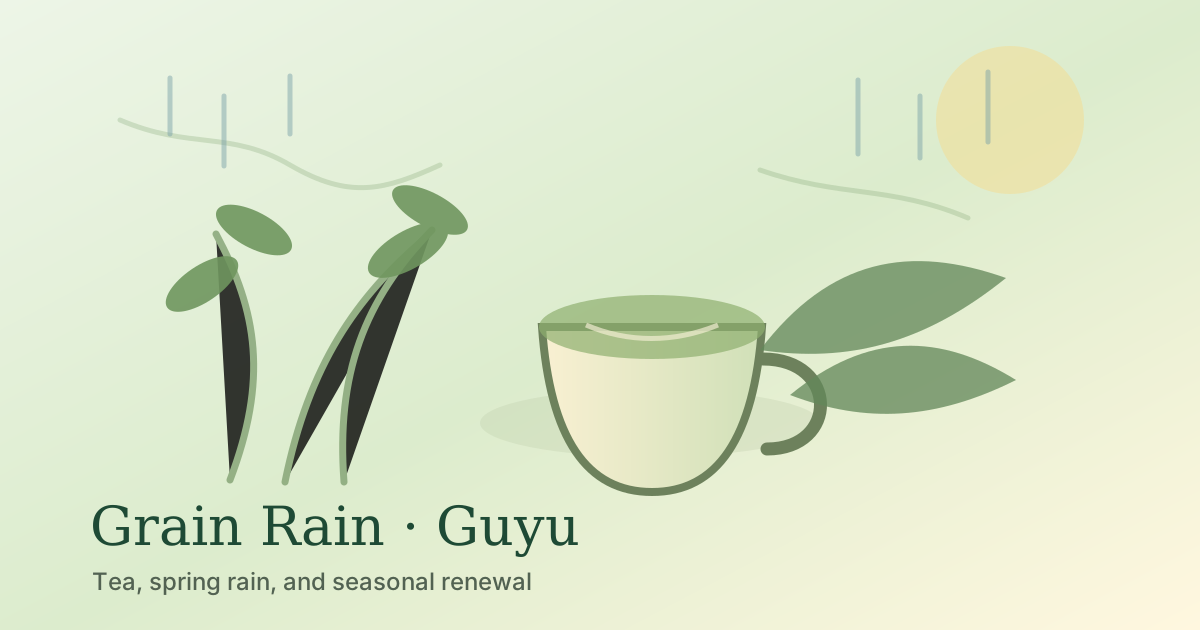
Grain Rain (Guyu): Tea, Spring Rain, and Seasonal Renewal
Grain Rain is the late-spring solar term when rain, tender tea leaves, and new grain growth become the seasonal image. This guide translates Guyu into plain English: what the term means, why tea matters, how spring rain is read culturally, and which small anchors can help a Western reader notice renewal without turning it into a wellness rule.
What Grain Rain (Guyu) actually is
Grain Rain (谷雨, Gǔyǔ) is one of the 24 solar terms (节气, jiéqì), the traditional Chinese calendar markers that divide the year into short seasonal windows. It usually falls around April 20 in the Gregorian calendar, after Clear and Bright (Qingming) and before Start of Summer (Lixia). The name is direct: grain is growing, rain is needed, and the fields are moving from early-spring promise into visible late-spring abundance.
For a concise external background, the Wikipedia overview of solar terms explains the 24-part calendar system, and the Guyu entry summarizes the term itself. SeasonQi uses these calendar markers as cultural reading points for modern life: not to predict health, but to notice seasonal pace, food tone, movement, tea, and ritual.
- Grain Rain is late spring, not early summer.
- The term points to rain that nourishes grain and field growth.
- It belongs to the Wood (木, mù) arc of spring in the Five Elements frame.
- For a Western reader, it can be read as a gentle reset between spring planning and summer activity.
Why rain matters in the cultural reading
In a farming calendar, rain is not just weather. It is timing. Too little rain and the seed struggles; too much and the soil becomes heavy. Grain Rain names the moment when spring moisture, warmer air, and growing fields are expected to work together. That is why the term feels softer than the bright, sweeping energy of early spring. The cultural picture is less about pushing upward and more about letting growth be nourished.
For daily life, this becomes a useful metaphor. Early spring often feels like planning, starting, and opening. Grain Rain asks what needs regular support so that the new growth can continue: meals that are light but steady, walks that match the weather, a tea break that makes room for attention, and a home rhythm that feels refreshed rather than overhauled. This is cultural and educational, not medical advice.
Wood element, spring growth, and renewal
In the Five Elements frame, spring belongs to Wood (木, mù). Wood is the image of roots, stems, branches, planning, direction, and fresh movement. Grain Rain sits late in that Wood season. The first shoots are no longer invisible. Leaves are opening. A plan that was only an intention in early February has begun to show whether it can actually grow.
The practical reading of Wood at Grain Rain is gentle adjustment. If the season feels too busy, the cultural response is not to force more output. It is to prune, water, and support what is already alive. That might mean simplifying the calendar, choosing one project to continue, or making food a little lighter as the weather warms. For a broader map of this seasonal system, see SeasonQi's Five Elements explained guide and the Start of Spring (Lichun) article.
Why tea is connected with Grain Rain
Guyu has a long association with spring tea. In many Chinese tea regions, late spring is a treasured picking window: the leaves have had warmth and rain, but the season has not yet moved into summer heat. The phrase "Guyu tea" often points to tea harvested around this solar term. The cultural idea is freshness after rain — not only in the field, but in the cup.
For background on the wider tradition, the Wikipedia overview of Chinese tea culture gives a general entry point, and the green tea overview explains one of the tea families most often associated with spring. SeasonQi keeps this simple: a cup of light tea around Grain Rain can be a quiet seasonal marker. It is not a remedy, and it does not need to be rare or expensive.
If you already have a tea practice, Guyu is a good week to notice aroma and temperature. If you are new, choose a simple green tea, a mild oolong, or a caffeine-free floral infusion if caffeine does not suit you. The point is not the perfect leaf. The point is a few minutes of attention: water, steam, scent, and the sense that the year has become greener.
Five quiet anchors for Grain Rain
You do not need to redesign your routine around April 20. Choose one or two quiet anchors and let them be small enough to repeat. The season is already doing the dramatic part; the human practice can stay modest.
- A rain-window tea break. On a rainy or cloudy afternoon, make a cup of light tea and sit near a window for a few quiet minutes. Notice sound, scent, and light. The quiet anchor is attention, not performance.
- A one-corner spring tidy. Choose one shelf, one bag, or one kitchen surface. Clear what no longer belongs and stop there. Grain Rain is a growth term, but growth often needs a little space.
- A slow walk after rain. If the ground is safe and the weather is mild, walk slowly after a shower and notice the smell of leaves, soil, and pavement. The cultural reading is that rain has made the world more alive.
- A lighter cooked meal. Choose cooked greens, rice, noodles, soup, tofu, eggs, beans, or fish rather than a heavy meal. The cultural tone is light and fresh, not raw and cold.
- A renewal note. Write down one thing that is already growing in your life and one thing that needs support. Keep it ordinary: a habit, a conversation, a project, a corner of the home.
If you only choose one, make it the tea break. Grain Rain is one of the easiest terms to feel through a cup: warmth, moisture, green aroma, and a small pause before summer speeds up.
Foods and drinks to favor around Grain Rain
Cultural food writing for Grain Rain usually follows the late-spring pattern: fresh, lightly cooked, green, aromatic, and easy to digest. This does not mean cold salads all day. In the Chinese seasonal reading, spring food can be light while still being warm or cooked. The goal is to match the season's freshness without shocking the body with extremes.
- Light spring teas — green tea, gentle oolong, jasmine-style tea, or a caffeine-free floral cup if that fits you better.
- Cooked greens — bok choy, spinach, pea shoots, asparagus, chard, or other tender greens, lightly cooked with a little ginger or garlic.
- Simple grains — rice, millet, oats, or noodles served with vegetables and a light broth or dressing.
- Fresh herbs — mint, cilantro, parsley, basil, scallion, or dill used as a small aromatic lift.
- Spring soups — light vegetable soup, tofu soup, or chicken broth with greens, keeping the meal warm but not heavy.
These are cultural food directions, not prescriptions. If you have a medical condition, take medication, are pregnant, or have food restrictions, please consult a qualified clinician before making changes to food, tea, or supplements.
A sample Grain Rain day
SeasonQi avoids harsh rules, because rules quickly become brittle. Grain Rain is better understood as a nudge. The spring season is growing and moist, so the cultural reading tends to reduce habits that feel too heavy, too stagnant, or too extreme for late spring. You might choose fewer greasy late meals, fewer iced drinks on warm afternoons, less over-scheduling, and one small clutter reset that makes the daily rhythm easier. None of these are moral rules. They are seasonal suggestions, and what you do with them is up to you.
- Morning: open a window for a few minutes if the air feels comfortable; choose a warm breakfast with grain and fruit, or eggs with cooked greens.
- Midday: eat a simple bowl of rice, noodles, soup, tofu, fish, eggs, or beans with a spring vegetable. Keep the meal bright but not cold.
- Afternoon: make a light tea and pause by a window. If it has rained, notice the smell of the air before returning to work.
- Evening: take a slow walk, clear one small surface, and write down one thing that needs gentle support through the next season.
This sample day is a cultural rhythm, not a clinical protocol. It can be adjusted for weather, work, family, mobility, and personal preference.
Movement, mood, and home rhythm around Guyu
Wood season is active, but Grain Rain adds moisture and patience. Movement can therefore be steady rather than forceful: walking, stretching, qigong, gardening, light housework, or any gentle practice that lets the body feel awake without becoming strained. For a beginner movement frame, see SeasonQi's qigong for beginners guide.
Mood can also be read through the Wood lens. Spring often brings plans, impatience, and a desire to move forward. Grain Rain softens that edge. It asks whether the plan is being watered, whether the schedule has enough space, and whether growth has become pressure. If feelings of sadness, agitation, anxiety, or low mood persist for more than two weeks, please reach out to a qualified mental health clinician.
At home, a Grain Rain ritual can be extremely small: rinse a teapot, wipe one windowsill, place fresh herbs in water, or move a plant into better light. The point is not aesthetic perfection. The point is to let the home reflect late spring's renewal in one visible place.
How Grain Rain connects to the rest of the seasonal calendar
Grain Rain comes near the end of the spring arc. It follows Clear and Bright, when many families in Chinese culture sweep graves and spend time outdoors, and it comes before Start of Summer, when the calendar begins to turn toward heat, light, and Fire. That position matters. Guyu is not the first spark of spring. It is spring after rain, spring with leaves, spring with enough warmth for growth to become visible.
In the larger 24-term cycle, Guyu pairs well with other transition terms: Start of Spring for beginnings, Spring Equinox for balance, and Start of Autumn for the later turn back toward coolness. If you want the full calendar, the complete 24 solar terms guide is the best next step.
Common beginner questions about Grain Rain
Is Grain Rain always rainy? Not necessarily. The term is a cultural seasonal marker, not a weather forecast for every city. Some places will be rainy, some dry, and some already warm. The name points to the farming image of rain nourishing grain, not a promise that rain will fall on a specific day.
Is Guyu tea a special product? Sometimes tea sellers use the phrase for tea harvested around the term. For a beginner, it is enough to understand the seasonal idea: tender spring leaves, fresh aroma, and a cup that marks late spring. You do not need a rare tea to participate respectfully.
Can this term be used outside China? Yes, if it is framed respectfully. A Western reader can notice local rain, leaves, soil, tea, and renewal while remembering that the term comes from the Chinese seasonal calendar. The practice should stay cultural, educational, and optional.
What this article is not
It is not a treatment for any medical condition. It is not a clinical protocol, a prescription, or a substitute for a qualified healthcare professional. Grain Rain, Guyu tea, Wood element language, and late-spring food suggestions are cultural and educational, drawn from the Chinese seasonal wellness tradition. If you have a known health condition, are pregnant, take medication, have caffeine sensitivity, or have any other concern, please consult a qualified clinician before changing food, tea, movement, or sleep patterns.
SeasonQi ritual prompt
During the Grain Rain window, make one cup of light tea and sit near a window, a plant, or a view of the sky. Ask one quiet question: what in my life is already growing, and what does it need next? Let the answer be small enough to act on today.
Safety and scope
This article is for educational and cultural purposes only. It is not medical advice, diagnosis, or treatment. It is not a substitute for a qualified healthcare professional. If you have a known health condition, are pregnant, take medication, have caffeine sensitivity, or have any other concern, please consult a licensed clinician before changing food, tea, movement, or sleep patterns.